| RJ Lindsey Living History Programs |
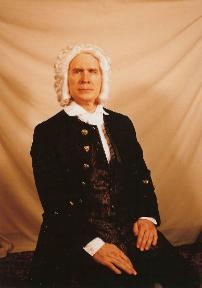
Johann Sebastian Bach - A Life in Music
Mr. Bach tells tales of his childhood: walking 100 miles to enroll in
the best vocal school; finding gold coins in a fish head at lunch.
He traces his musical career and certain difficulties: called second
rate by one town council; calling a bassoon player a nanny goat
requiring defense by the sword; being arrested by his employer Duke
Wilhelm Ernst.
He speaks about Descartes and the Passions of the Soul that
influence the Baroque musician; the structure of the Fugue for which
he is famous, and his Coffee Cantata.
Recordings of his music are played: Tocatta from the Fugue in D
Minor, Badinerie from Orchestral Suite #2, Gott ist Mein Konig first
part, Prelude in E minor (his only piece in e flat minor), Cantata BVW
21 choral fugue, Prelude in C, Air on a G string.
Slides are shown picturing his childhood home, fellow composers
Handel and Mozart and notorious sopranos Francesca Cuzzoni and
Faustina Bordoni, and Johann Reinkin, Dieterich Buxtehude, Johann
Goldberg, and his favorite employer Prince Christian Leopold.
Mr. Bach tells tales of his childhood: walking 100 miles to enroll in
the best vocal school; finding gold coins in a fish head at lunch.
He traces his musical career and certain difficulties: called second
rate by one town council; calling a bassoon player a nanny goat
requiring defense by the sword; being arrested by his employer Duke
Wilhelm Ernst.
He speaks about Descartes and the Passions of the Soul that
influence the Baroque musician; the structure of the Fugue for which
he is famous, and his Coffee Cantata.
Recordings of his music are played: Tocatta from the Fugue in D
Minor, Badinerie from Orchestral Suite #2, Gott ist Mein Konig first
part, Prelude in E minor (his only piece in e flat minor), Cantata BVW
21 choral fugue, Prelude in C, Air on a G string.
Slides are shown picturing his childhood home, fellow composers
Handel and Mozart and notorious sopranos Francesca Cuzzoni and
Faustina Bordoni, and Johann Reinkin, Dieterich Buxtehude, Johann
Goldberg, and his favorite employer Prince Christian Leopold.
| Daniel Burnham - Make No Little Plans The City of Chicago rose from the ashes of the Fire of 1871 to the remarkable White City of the 1893 World’s Columbian Exposition. Mr. Burnham narrates a slide program detailing the Chicago Fire of 1871, the building of the 1893 World's Columbian Exhibition, and the Chicago Plan of 1909 outlining the development plan for the city. The famed architect discusses his innovative buildings: Montauk, Monandnock, Reliance, and the Rookery, and presents the historic Burnham Plan of 1909 advocating sensible city growth asking, “How are we living?” . |
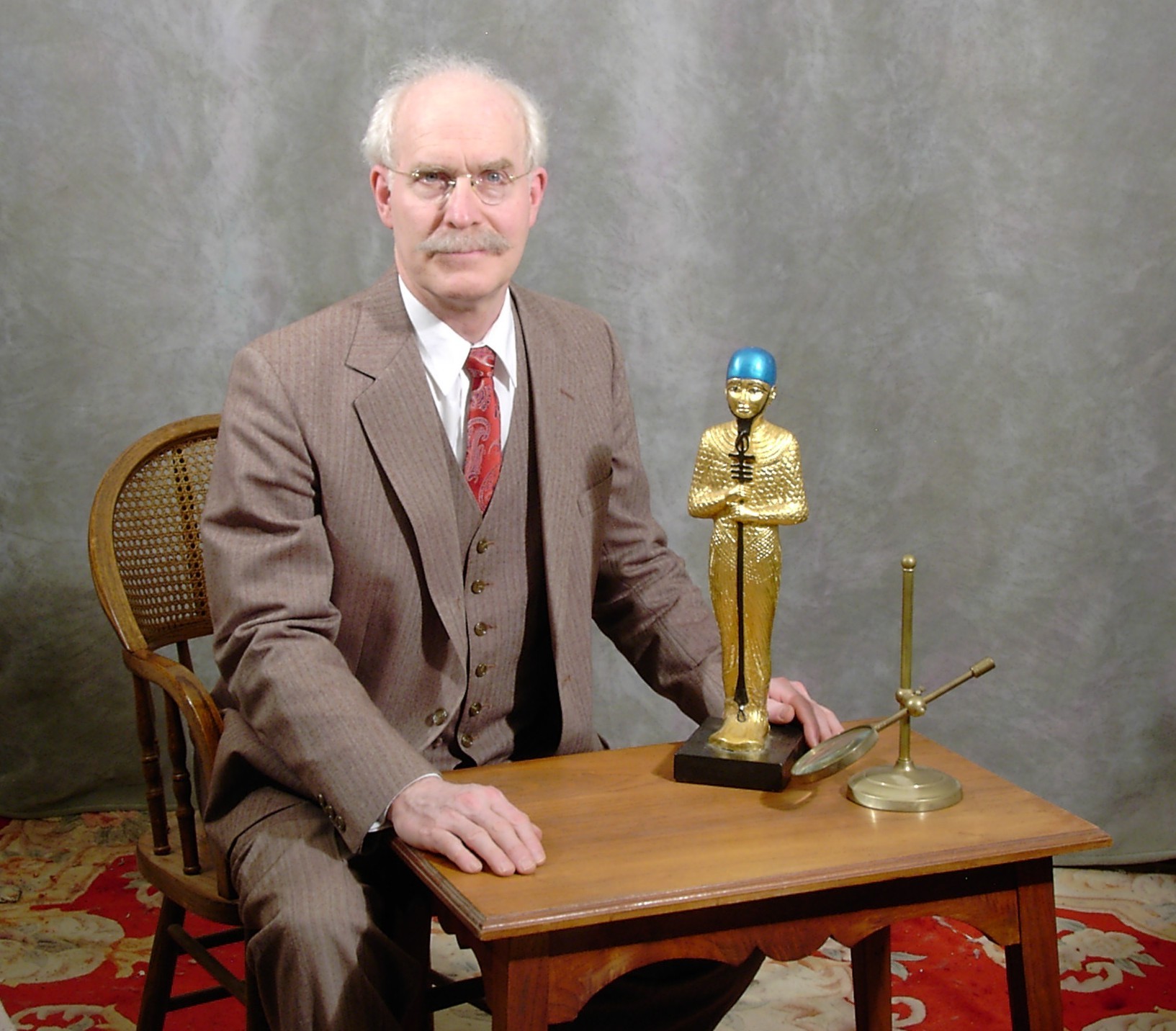
James Breasted - Treasures of King Tut
Dr. Breasted was the first American to earn a Ph.D. in
Egyptology after rigorous study in Berlin and the first
president of the Oriental Institute in Chicago. Carrying two
pistols and a supply of various currencies and gold for
bargaining, he explored the ancient monuments and tombs of
Egypt.
He visited King Tut’s tomb shortly after it was opened in 1922
by Howard Carter. Dr. Breasted presents a dramatic slide
show about the archaeological clues that led to the discovery
of the tomb and his feelings of joy and amazement viewing the
wondrous artifacts not seen for over three thousand years.
A representative sampling of the amazing objects is viewed
with explanations of their composition and mystical
purposes. Dr. Breasted also explains the origin of the
famous curse of King Tut. It began with a canary and a cobra.
Dr. Breasted was the first American to earn a Ph.D. in
Egyptology after rigorous study in Berlin and the first
president of the Oriental Institute in Chicago. Carrying two
pistols and a supply of various currencies and gold for
bargaining, he explored the ancient monuments and tombs of
Egypt.
He visited King Tut’s tomb shortly after it was opened in 1922
by Howard Carter. Dr. Breasted presents a dramatic slide
show about the archaeological clues that led to the discovery
of the tomb and his feelings of joy and amazement viewing the
wondrous artifacts not seen for over three thousand years.
A representative sampling of the amazing objects is viewed
with explanations of their composition and mystical
purposes. Dr. Breasted also explains the origin of the
famous curse of King Tut. It began with a canary and a cobra.
Charles Dawes - The Great War
"Dawes is a pearl without price."
Gen. John J. Pershing
At age 52 Charles Dawes, Chicago banker and businessman,
wanted to serve his country. His family history called to him:
great-great grandfather William Dawes rode wih Paul Revere;
his father Rufus Dawes served in the "Iron Brigade" in the Civil
War.
Definitely overage, Dawes pulled a few strings with long time
friend from Lincoln, Nebraska days, Gen. John Pershing.
Joining the 17th Engineers, Dawes expected to build
warehouses and railroads. But Pershing needed someone to
bring order out of the supply system chaos and appointed
Dawes General Purchasing Agent for the AEF in France.
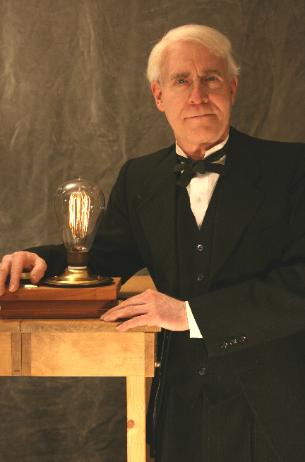
Thomas Edison-America's Inventor
The famed inventor speaks of his life of invention as
powerpoint pictures fill the screen showing his life story
and many inventions. He speaks of his childhood; called
addled by his schoolteacher, home schooled by his
mother, first chemistry experiments which sometimes
exploded and caused fires, his experiments using his
childhood friends. They got sick and he got switched.
As an itinerant telegrapher, he traveled around the
Midwest and invented an automatic telegraph signal so he
could take naps. He got in trouble often and had to leave
town for the next telegraph job.
Edison speaks of his wife Mina who believes the term
housewife is inappropriate. She says she should be
called a home executive.
Thomas Edison shares stories of the difficulty in finding
the right light bulb filament after 1,000 tries. He also had
to invent the entire lighting system from wires to fuses,
meters and dynamos.
His favorite invention the phonograph amazed the world.
One man thought it a ventriloquist act because no
machine could reproduce human speech. It was
impossible.
Wanting to do for the eye what he had done for the ear
with the phonograph, Edison developed motion pictures
releasing the first movie The Great Train Robbery in
1903.
Other stories follow about magnetic ore separation,
portland cement, and even wax paper. With 1093
patents, Thomas Edison is America's inventor.
The famed inventor speaks of his life of invention as
powerpoint pictures fill the screen showing his life story
and many inventions. He speaks of his childhood; called
addled by his schoolteacher, home schooled by his
mother, first chemistry experiments which sometimes
exploded and caused fires, his experiments using his
childhood friends. They got sick and he got switched.
As an itinerant telegrapher, he traveled around the
Midwest and invented an automatic telegraph signal so he
could take naps. He got in trouble often and had to leave
town for the next telegraph job.
Edison speaks of his wife Mina who believes the term
housewife is inappropriate. She says she should be
called a home executive.
Thomas Edison shares stories of the difficulty in finding
the right light bulb filament after 1,000 tries. He also had
to invent the entire lighting system from wires to fuses,
meters and dynamos.
His favorite invention the phonograph amazed the world.
One man thought it a ventriloquist act because no
machine could reproduce human speech. It was
impossible.
Wanting to do for the eye what he had done for the ear
with the phonograph, Edison developed motion pictures
releasing the first movie The Great Train Robbery in
1903.
Other stories follow about magnetic ore separation,
portland cement, and even wax paper. With 1093
patents, Thomas Edison is America's inventor.
William Hammond,M.D.,
Surgeon General
The Civil War Surgeon General comments upon
Civil War medicine: the improvements in military
medicine with the introduction of the ambulance
corps and triage system; the historical medical
advancements: surgical ligature, infection control
and the latest medical controversy of whether or
not to use anesthetic for major surgery.
Dr. Hammond tells dramatic stories of several
courageous nurses standing up to the generals,
including Sherman, and the surgeons in order to get
the needed supplies and food for their patients.
The Surgeon General brings along a collection of
surgical instruments including: a wooden monaural
stethoscope, anesthetic funnel, and a complete set
of amputation tools.
Surgeon General
The Civil War Surgeon General comments upon
Civil War medicine: the improvements in military
medicine with the introduction of the ambulance
corps and triage system; the historical medical
advancements: surgical ligature, infection control
and the latest medical controversy of whether or
not to use anesthetic for major surgery.
Dr. Hammond tells dramatic stories of several
courageous nurses standing up to the generals,
including Sherman, and the surgeons in order to get
the needed supplies and food for their patients.
The Surgeon General brings along a collection of
surgical instruments including: a wooden monaural
stethoscope, anesthetic funnel, and a complete set
of amputation tools.
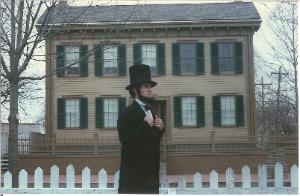
Abraham Lincoln
The president speaks about the Civil War; its
begining; the misconceptions Northerners and
Southerners had about each other; the crisis
decisions those first 40 days; his trouble with
generals; his purpose to preserve the Union and free
elections and to place slavery on the road to
extinction.
President Lincoln speaks about his life: growing up
in Kentucky and Indiana, attending a blab school.
The president speaks about the Civil War; its
begining; the misconceptions Northerners and
Southerners had about each other; the crisis
decisions those first 40 days; his trouble with
generals; his purpose to preserve the Union and free
elections and to place slavery on the road to
extinction.
President Lincoln speaks about his life: growing up
in Kentucky and Indiana, attending a blab school.
Franklin D. Roosevelt
A Fireside Chat
The news headlines of today call forth the truth of
FDR's words of 80 years ago. He speaks out against
religious and racial intolerance; against the voices of
deceit and despair. He speaks for the people, for the
well being of our neighbors and a for a government that
is the embodiment of human charity.
FDR reads Depression era letters from citizens asking
for help, the most touching from children, and recounts
the New Deal programs designed to help in the days
when the people mattered.
Jobs: CCC, TVA, PWA, CWA, WPA
Financial regulation: FDIC, SEC, Glass-Steagall
Saving homes and farms: FHA, FCA, AAA
A Fireside Chat
The news headlines of today call forth the truth of
FDR's words of 80 years ago. He speaks out against
religious and racial intolerance; against the voices of
deceit and despair. He speaks for the people, for the
well being of our neighbors and a for a government that
is the embodiment of human charity.
FDR reads Depression era letters from citizens asking
for help, the most touching from children, and recounts
the New Deal programs designed to help in the days
when the people mattered.
Jobs: CCC, TVA, PWA, CWA, WPA
Financial regulation: FDIC, SEC, Glass-Steagall
Saving homes and farms: FHA, FCA, AAA
"Stories Aboard the Titanic"
On April 14, 1912 the H.M.S.Titanic strikes an ice berg and sends out an
S.O.S. At 1:30 a.m. Managing Editor Carr Van Anda of the NY Times
reads that wireless message.
Van Anda presents a slide program detailing the ship's construction: its
luxurious accommodations and modern safety features.
Then he recounts the hour by hour events of the dramatic maiden voyage
that led to the fateful iceberg collision.
As the ship sinks Van Anda tells the stories of several passengers from
First, Second and Third Class; Who were they? Why were they on
board. What fate awaited them?
On April 14, 1912 the H.M.S.Titanic strikes an ice berg and sends out an
S.O.S. At 1:30 a.m. Managing Editor Carr Van Anda of the NY Times
reads that wireless message.
Van Anda presents a slide program detailing the ship's construction: its
luxurious accommodations and modern safety features.
Then he recounts the hour by hour events of the dramatic maiden voyage
that led to the fateful iceberg collision.
As the ship sinks Van Anda tells the stories of several passengers from
First, Second and Third Class; Who were they? Why were they on
board. What fate awaited them?
Thomas Paine
The Voice of the American Revolution
America’s first best selling author tells his story of rising from
working class roots to the pinnacle of world fame.
His pamphlet “Common Sense” inspired the people to support
independency. His words “These are the times that try men’s
souls” inspired Washington’s army to continue the fight.
Paine dramatically describes the pivotal Battle of Trenton where
George Washington, against all odds, defeated the Hessian
mercenaries after crossing the Delaware River.
Paine speaks of his writings: “Common Sense,” “The Rights of
Man” and the controversial criticism of revealed religion “Age of
Reason”.
His belief in abolishing monarchy and establishing republican
government earned him a British death sentence and French
citizenship during their revolution.
The first person to use the phrase “the United States of America”
Thomas Paine helped create the modern world.
The Voice of the American Revolution
America’s first best selling author tells his story of rising from
working class roots to the pinnacle of world fame.
His pamphlet “Common Sense” inspired the people to support
independency. His words “These are the times that try men’s
souls” inspired Washington’s army to continue the fight.
Paine dramatically describes the pivotal Battle of Trenton where
George Washington, against all odds, defeated the Hessian
mercenaries after crossing the Delaware River.
Paine speaks of his writings: “Common Sense,” “The Rights of
Man” and the controversial criticism of revealed religion “Age of
Reason”.
His belief in abolishing monarchy and establishing republican
government earned him a British death sentence and French
citizenship during their revolution.
The first person to use the phrase “the United States of America”
Thomas Paine helped create the modern world.
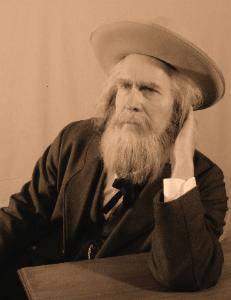
Walt Whitman - America's Poet
Walt Whitman, one of the greatest poets America has ever produced,
shares stories of his life and readings of his poetry. He begins with
several verses of his masterpiece “Leaves of Grass.”
Whitman also speaks of his three years as a wound dresser tending to
the needs of the wounded and sick filling the Washington, DC
hospitals. He brought care, attention and compassion to the lonely men
so far from home.
A great admirer of Abraham Lincoln, Whitman reads from his Lincoln
lecture series narrating the night of the assassination and presenting a
reading of his most popular poem, “Oh, Captain, My Captain.”
Walt Whitman, one of the greatest poets America has ever produced,
shares stories of his life and readings of his poetry. He begins with
several verses of his masterpiece “Leaves of Grass.”
Whitman also speaks of his three years as a wound dresser tending to
the needs of the wounded and sick filling the Washington, DC
hospitals. He brought care, attention and compassion to the lonely men
so far from home.
A great admirer of Abraham Lincoln, Whitman reads from his Lincoln
lecture series narrating the night of the assassination and presenting a
reading of his most popular poem, “Oh, Captain, My Captain.”
Charles Darwin - Journey of Discovery
The great naturalist narrates a slide presentation: "Join me in a
fantastical journey into the natural world of flamingos and
tortoises, fossils and finches, earthquakes and volcanoes and
especially of the origin of species."
"There is a tide in the affairs of men." Darwin experienced
that tide at age 22 and details the 5 year around-the-world
voyage of the H.M.S. Beagle.
Now come the discoveries. Darwin selects five elements of
interest: A South American Ostriche, giant quadruped fossils,
the Concepcion earthquake, 14,000 foot high Andes seashells,
and the Galapagos finches.
The great naturalist narrates a slide presentation: "Join me in a
fantastical journey into the natural world of flamingos and
tortoises, fossils and finches, earthquakes and volcanoes and
especially of the origin of species."
"There is a tide in the affairs of men." Darwin experienced
that tide at age 22 and details the 5 year around-the-world
voyage of the H.M.S. Beagle.
Now come the discoveries. Darwin selects five elements of
interest: A South American Ostriche, giant quadruped fossils,
the Concepcion earthquake, 14,000 foot high Andes seashells,
and the Galapagos finches.

And and then come the questions. Why two Ostriche species living adjacent? Are the ancient fossil animals
related to modern forms? Are the forces propelling earthquakes and volcanoes the same? How were the
seashells raised up above sea level? How did the Galapagos finches, which are related to South American
birds, become new species? How did the plants and animals even get to the Galapagos?
Using John Gould bird prints, chromolithographs of dinosaurs, nature photographs and his own drawings,
Darwin answers his questions using his theory of Descent with Modification powered by Natural Selection.
His book The Origin of Species changed Biology and our view of the world forever.
related to modern forms? Are the forces propelling earthquakes and volcanoes the same? How were the
seashells raised up above sea level? How did the Galapagos finches, which are related to South American
birds, become new species? How did the plants and animals even get to the Galapagos?
Using John Gould bird prints, chromolithographs of dinosaurs, nature photographs and his own drawings,
Darwin answers his questions using his theory of Descent with Modification powered by Natural Selection.
His book The Origin of Species changed Biology and our view of the world forever.
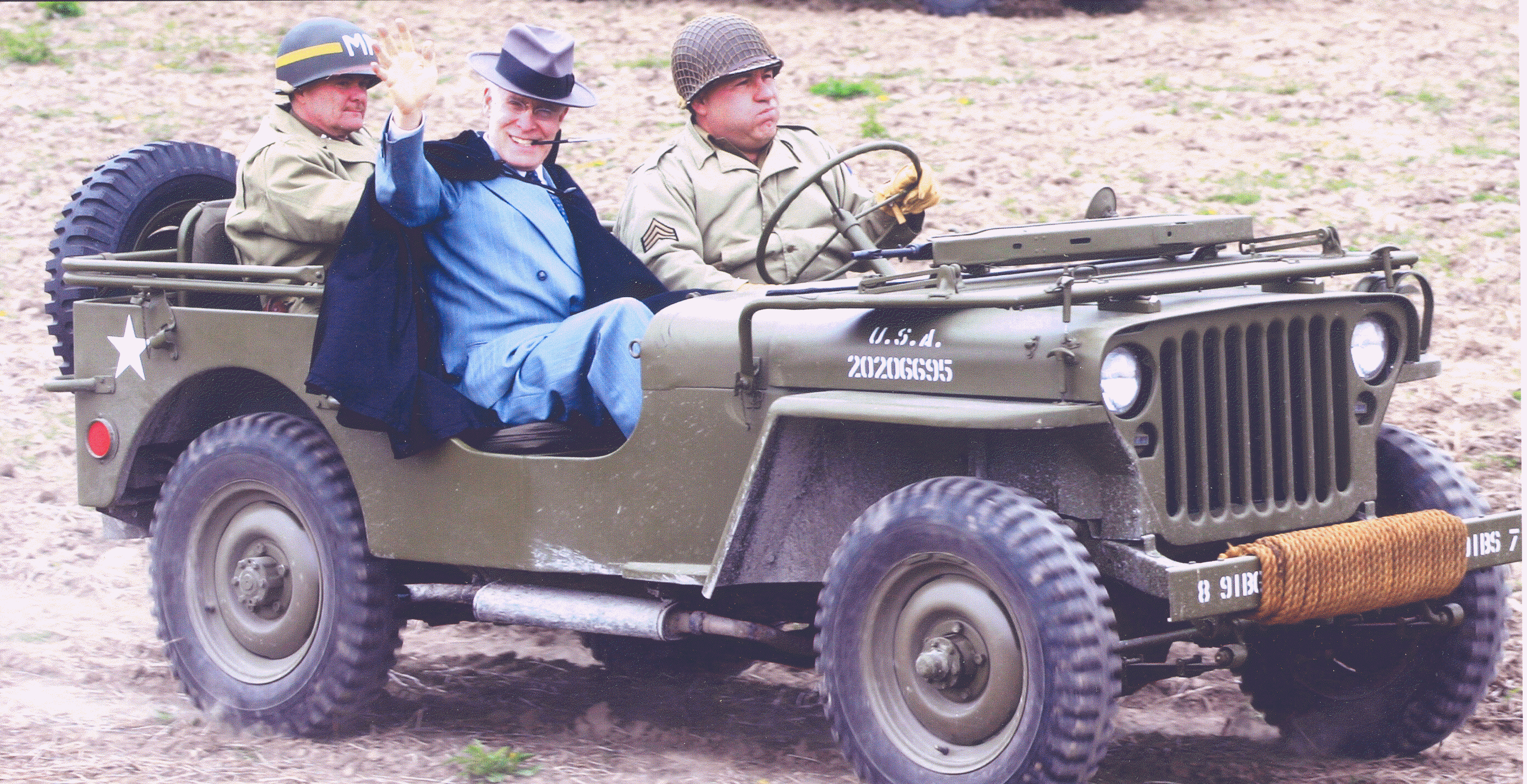
The president reminds us all of the challenges of WWII and the many ifs facing the nation in 1942. When skeptics
challenged his war production goals, FDR replied, "Let no man say it cannot be done; it must be done and we have
undertaken to do it."
At the conclusion of his “Fireside Chat” the President invites audience questions.
challenged his war production goals, FDR replied, "Let no man say it cannot be done; it must be done and we have
undertaken to do it."
At the conclusion of his “Fireside Chat” the President invites audience questions.
Stephen T. Mather:
Saving America's Scenic Wonders
Stephen T. Mather, founding director of the N.P.S., tells the dramatic story of
saving the parks from congressional neglect, ruthless loggers and greedy
developers. When an illegal sawmill in Glacier Park refused to close down,
Mather blew it up with some handy charges of TNT.
It all began in 1914 when Mather hiked in the Sequoia and Yosemite Parks
witnessing their deplorable condition. He wrote a letter of complaint to Franklin
Lane, Secretary of the Interior. Lane wrote back, "Steve, if you don't like the
way the national parks are being run, why don't you come on down to
Washington and run them yourself." He did.

He reviews major election contests: Congressional race against evangelist Peter Cartwright when Cartwright
asked if Lincoln were going to Heaven or Hell and Lincoln said, “I’m going to Congress;” and his debates with
Stephen Douglas.
The famed Lincoln humor is revealed as the president share stories about critics, office-seekers, lawyers,
generals and Congressman.
In conclusion the president says he is “but an accidental instrument, temporary, to serve for a short time.” He
says it will be up to the American people to preserve the Union and its liberties to the latest generation.
asked if Lincoln were going to Heaven or Hell and Lincoln said, “I’m going to Congress;” and his debates with
Stephen Douglas.
The famed Lincoln humor is revealed as the president share stories about critics, office-seekers, lawyers,
generals and Congressman.
In conclusion the president says he is “but an accidental instrument, temporary, to serve for a short time.” He
says it will be up to the American people to preserve the Union and its liberties to the latest generation.

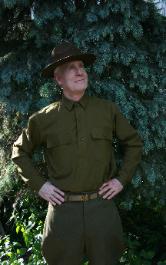
If an important piece of land or a roadway were in private hands, Mather and his wealthy friends bought it and donated to
the park system. At first Congressman Fitzgerald thought Mather must be trying to bribe somebody. Stephen Mather
made his millions in the Borax business. An advertising genius he created the 20 Mule Team Borax campaign. He wrote
letters to newspapers and magazines posing as a homemaker who had discovered the virtues of using borax. Mather
traces his own important life experiences that made him the best person to be the first park director.
Director Mather also traces the history the of first national park, Yellowstone, with tales of Napoleon, Thomas Jefferson,
and John Colter. Colter's description of a place of fire and brimstone was dismissed as mere delerium.
Other stories follow: Yosemite and John Muir, the Park to Park highway, the adventure of a Mather mountain party, and
the final drive to pass the National Park Service bill, including if needed, diverting an opposing Congressman to the golf
course during voting.
During his tenure, the park system nearly doubled in size and more Americans visited than ever before. Director Mather
tells his story with stunning photographs of the park lands and wildlife he fought to save.
the park system. At first Congressman Fitzgerald thought Mather must be trying to bribe somebody. Stephen Mather
made his millions in the Borax business. An advertising genius he created the 20 Mule Team Borax campaign. He wrote
letters to newspapers and magazines posing as a homemaker who had discovered the virtues of using borax. Mather
traces his own important life experiences that made him the best person to be the first park director.
Director Mather also traces the history the of first national park, Yellowstone, with tales of Napoleon, Thomas Jefferson,
and John Colter. Colter's description of a place of fire and brimstone was dismissed as mere delerium.
Other stories follow: Yosemite and John Muir, the Park to Park highway, the adventure of a Mather mountain party, and
the final drive to pass the National Park Service bill, including if needed, diverting an opposing Congressman to the golf
course during voting.
During his tenure, the park system nearly doubled in size and more Americans visited than ever before. Director Mather
tells his story with stunning photographs of the park lands and wildlife he fought to save.

Nationally know Max Daniels and RJ Lindsey appear together
presenting Lincoln and Roosevelt in their times of challenge.
Moderator Donna Daniels guides the presentation with questions
about Fort Sumter, Pearl Harbor, the appropriate role of
government, and accusations of dictatorship.
The two presidents also reveal when they first considered a run
for the presidency and how it actually happened.
Naturally Ms. Daniels wants to know about the First Ladies and
the important role these dynamic women played in American
history. Stories of Mary Todd and Eleanor Roosevelt are
shared with the audience.
At the conclusion the audience is invited to ask questions.
Invite them now. You never know when they will be
togther again.
presenting Lincoln and Roosevelt in their times of challenge.
Moderator Donna Daniels guides the presentation with questions
about Fort Sumter, Pearl Harbor, the appropriate role of
government, and accusations of dictatorship.
The two presidents also reveal when they first considered a run
for the presidency and how it actually happened.
Naturally Ms. Daniels wants to know about the First Ladies and
the important role these dynamic women played in American
history. Stories of Mary Todd and Eleanor Roosevelt are
shared with the audience.
At the conclusion the audience is invited to ask questions.
Invite them now. You never know when they will be
togther again.
The Amazing Dr. Franklin
With a wink and a smile, ol' Ben invites you to dinner, and over a fine glass of
claret, tells stories of his youth, his inventions ( lightning rod, stove, bifocal
glasses, book grabber, swim fins, first political cartoon), public institutions
(the first: police force, volunteer fire department, fire insurance company,
lending library, hospital, educational academy) and people of the revolution:
cantankerous John Adams, bilious Arthur Lee, the bumbling British, the
fascinating French, the double-dealing Dutch.
From Philadelphia, London and Paris: stories of spies, secret codes, court
intrigues, Congressional jealousies and America's most clever ambassador, B.
Franklin, printer.

When Pershing called up Dawes requesting 60,000 horses to pull artillary, Dawes used smugglers to bring them in
from Spain. Railroad ties were found in Portugal, the engines in Belgium. For his service five governments awarded
him high honors.
Charles Dawes speaks in detail with photos and maps about the politics, alliances and the royal family connections of
the world that then exploded into the maelstrom of WWI. He tells stories of the British, French, Lloyd George,
Clemanceau, Kaiser Wilhelm, Czar Nicholas. He recounts American successes at the battles of Cantigny, 2nd Marne,
Chateau Thierry, Belleau Wood and St. Miheil.
Dawes delightedly describes his famed “Hell and Maria” speech to Congress railing against pin head politicians who
criticized war time spending to gain political advantage. After his testimony, the committee disbanded.
from Spain. Railroad ties were found in Portugal, the engines in Belgium. For his service five governments awarded
him high honors.
Charles Dawes speaks in detail with photos and maps about the politics, alliances and the royal family connections of
the world that then exploded into the maelstrom of WWI. He tells stories of the British, French, Lloyd George,
Clemanceau, Kaiser Wilhelm, Czar Nicholas. He recounts American successes at the battles of Cantigny, 2nd Marne,
Chateau Thierry, Belleau Wood and St. Miheil.
Dawes delightedly describes his famed “Hell and Maria” speech to Congress railing against pin head politicians who
criticized war time spending to gain political advantage. After his testimony, the committee disbanded.

New York Times Managing Editor, Carr Van Anda tells the story of
the Lusitania; its military design, luxurious accommodations, famous
Americans on board and the attack by German submarine U-20 in
1915. The American public was outraged by this inhumane act.
Van Anda also speaks in detail with photos and animated battle
maps about the major battles along the Western Front in Europe
and the American successes at the battles of Cantigny, 2nd Marne,
Chateau Thierry, Belleau Wood and St. Miheil one hundred years
ago.
the Lusitania; its military design, luxurious accommodations, famous
Americans on board and the attack by German submarine U-20 in
1915. The American public was outraged by this inhumane act.
Van Anda also speaks in detail with photos and animated battle
maps about the major battles along the Western Front in Europe
and the American successes at the battles of Cantigny, 2nd Marne,
Chateau Thierry, Belleau Wood and St. Miheil one hundred years
ago.
| Lusitania, America and WWI America's entry into WWI. |
FDR's words of 80 years ago ring
true again.
true again.

| Bikes, Gas Buggies and Burma Shave |
Ransom E, Olds, founder of Oldsmobile and the father of the
Detroit auto industry strides into the room wearing his duster and
driving goggles, to narrate a slide program detailing the early auto
inventors: Diamler, Benz, Duryea, Olds, Dodge, Studebaker,
Hupmobile, Ford, Stanley. The Olds curved dash runabout was the
first best selling car in America. It was Olds who started the
assembly line (not Ford), the parts supplier system, and schooled
many men who later started their own companies.
Right behind the production of autos was the racing of autos. Olds
relates the 1896 race from Grant Park in Chicago to Evanston,
Illinois and back.; average speed - 5 miles an hour over 53 miles in
ten hours 23 minutes. The 1903 race from New York to San
Francisco took 63 days says Bud the bulldog who went along.
Not to be outdone Alice Ramsey and three companions became
the first women to travel from New York to San Francisco in 1909
driving a Maxwell touring car. Madam C.J. Walker was the first
African-American women to buy a car and the first to become a
millionaire selling her beauty and hair care products.
And of course the famous Burma Shave signs along the highways
that gave a boost to Burma Shave sales and put a smile on many
faces. i
Detroit auto industry strides into the room wearing his duster and
driving goggles, to narrate a slide program detailing the early auto
inventors: Diamler, Benz, Duryea, Olds, Dodge, Studebaker,
Hupmobile, Ford, Stanley. The Olds curved dash runabout was the
first best selling car in America. It was Olds who started the
assembly line (not Ford), the parts supplier system, and schooled
many men who later started their own companies.
Right behind the production of autos was the racing of autos. Olds
relates the 1896 race from Grant Park in Chicago to Evanston,
Illinois and back.; average speed - 5 miles an hour over 53 miles in
ten hours 23 minutes. The 1903 race from New York to San
Francisco took 63 days says Bud the bulldog who went along.
Not to be outdone Alice Ramsey and three companions became
the first women to travel from New York to San Francisco in 1909
driving a Maxwell touring car. Madam C.J. Walker was the first
African-American women to buy a car and the first to become a
millionaire selling her beauty and hair care products.
And of course the famous Burma Shave signs along the highways
that gave a boost to Burma Shave sales and put a smile on many
faces. i


| Life Through the Lens of Kodak George Eastman |
George Eastman, founder of Kodak, presents a slide
program and a display of vintage cameras to tell the
Kodak story. With the $1.00 Brownie box camera,
snapshot photography became possible. Affordable
and easy to use, anyone, including children, could
take snapshots. A record of every family event began
to appear in photo albums.
Historical events were recorded through the lens of a
Kodak camera: Lester Whitman and Eugene
Hammond drove from San Francisco to New York in
1903 carrying a Kodak #4 cartridge camera. They
took selfies along the way; 17 year old Bernice
Palmer aboard the rescue ship Carpathia took
program and a display of vintage cameras to tell the
Kodak story. With the $1.00 Brownie box camera,
snapshot photography became possible. Affordable
and easy to use, anyone, including children, could
take snapshots. A record of every family event began
to appear in photo albums.
Historical events were recorded through the lens of a
Kodak camera: Lester Whitman and Eugene
Hammond drove from San Francisco to New York in
1903 carrying a Kodak #4 cartridge camera. They
took selfies along the way; 17 year old Bernice
Palmer aboard the rescue ship Carpathia took
photos of Titanic survivors; Arctic explorer Robert Peary carried 4 Kodak cameras; a Vest Pocket Kodak recorded the WWI
Christmas Truce along the Western Front. From England to Australia and Tasmania to Egypt, Kodak stores were there,
George Eastman was also a major philanthropist giving away nearly 2 billion dollars in today's value for dental clinics for
indigent families, to M.I.T., the Tuskeegee Institute, and the University of Rochester. He founded the Eastman school of Music
and Strong Memorial Hospital. "Your reputation is made by how you improve other people's lives."
Mr. Eastman demonstrates several of his cameras and their unique features. Remember," if it isn't an Eastman, it isn't a
Kodak."
Christmas Truce along the Western Front. From England to Australia and Tasmania to Egypt, Kodak stores were there,
George Eastman was also a major philanthropist giving away nearly 2 billion dollars in today's value for dental clinics for
indigent families, to M.I.T., the Tuskeegee Institute, and the University of Rochester. He founded the Eastman school of Music
and Strong Memorial Hospital. "Your reputation is made by how you improve other people's lives."
Mr. Eastman demonstrates several of his cameras and their unique features. Remember," if it isn't an Eastman, it isn't a
Kodak."
| FDR and Lincoln Together America in Crisis |
| Benjamin Franklin Entrepreneur, Scientist, Revolutionary |
 | |  | |  | |  |

| If there are seniors in your organization or facility, they will have shopped at Marshall Fields as did their parents and probably their grandparents. Some will have worked at the store. They know the Walnut Room, the Christmas tree and the Christmas windows. From a muddy, scrappy, western town, Potter Palmer and the Palmer House, Mayor W. Ogden and the first train, Harry Selfridge, George Pullman, John G. Shedd, Daniel Burnham, Medill of the Tribune all built a great city. RJ Lindsey portrays Marshall Field narrating the story of the fastest growing city in the world and how it became the Queen City of the Midwest and he, the greatest merchant in the country. |
Marshall Field and the
The Rise of Chicago
The Rise of Chicago